 Many Hands Home
Twin Nap Routine Logistics Without Clock-Chasing
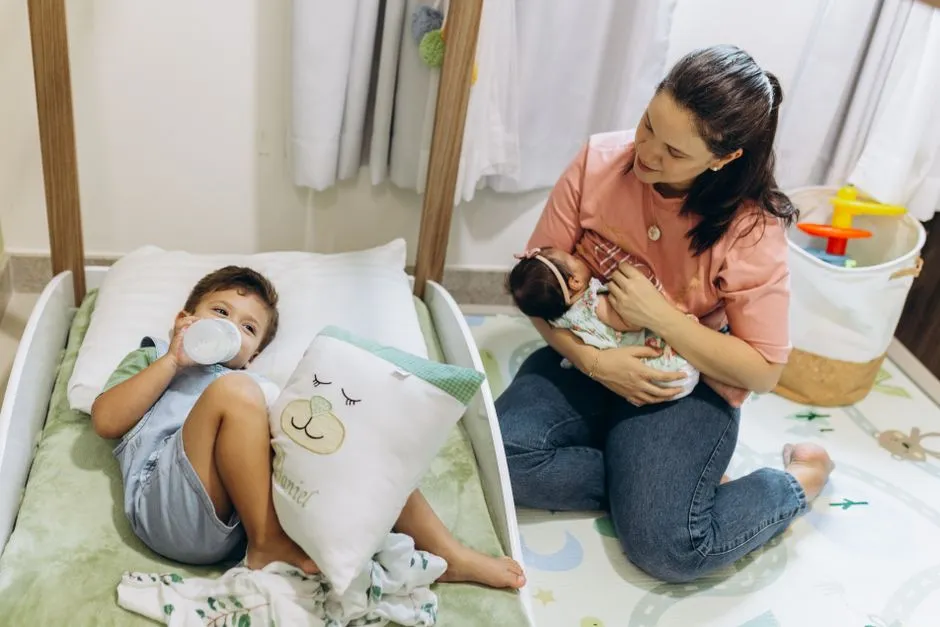
- Organize the room and handoff, not a universal clock
- Use a short pre-nap sequence
- Record each baby separately
- Prepare for staggered naps
- Make the handoff explicit
- Reset between sleep periods
- Audit the environment after every change
- The sleep surface is never shared
- Account for prematurity without inventing a schedule
Organize the room and handoff, not a universal clock
Twin nap routine logistics should make the existing sleep plan easier to carry out: prepare each baby's separate sleep space, track each baby separately, lower avoidable household friction, and define the caregiver handoff. Do not force synchronization or invent sleep targets. Each baby's pediatrician and current official safe-sleep guidance govern sleep decisions.
Call emergency services if a baby cannot be woken, is struggling to breathe, or appears in immediate danger. Contact the pediatrician about sleep, breathing, feeding, illness, or developmental concerns.
Use a short pre-nap sequence
Choose a small sequence that can be repeated without racing the clock. It may include checking the individual care plan, preparing each baby's separate sleep space, completing the baby's ordinary routine, and updating the log. Keep lighting, sound, clothing, temperature, positioning, and sleep products aligned with current pediatric and official guidance rather than household experimentation.
The sequence should be short enough for one caregiver to complete safely with the other baby supervised. The solo bedtime routine applies the same principle later in the day.
Record each baby separately
Use separate rows for when the routine began, when the baby was placed in their own sleep space, and any observation the pediatrician asked the family to track. Do not turn a guessed time into a precise entry, and do not use one twin's pattern as a target for the other.
Review patterns only for household planning or with the pediatrician. A family log cannot diagnose a sleep problem or establish what is medically appropriate.
Prepare for staggered naps
Assume overlap will vary. Set up a quiet caregiver task for periods when one baby sleeps and the other is awake, and keep the necessary care zone nearby without altering the safe sleep space. Avoid a plan that requires leaving either baby unsupervised or carrying both while handling doors, stairs, or equipment.
Connect nap records to the twins daily routine at a fixed review point instead of checking the clock all day.
Make the handoff explicit
At caregiver change, state each baby's own sleep space, when the last verified check occurred, what the current plan requires, and whether a concern needs clinical follow-up. Transfer monitor or device responsibility according to its instructions, while remembering that a device does not replace adult supervision.
The night-shift schedule provides a fuller ownership model for overnight care.
Reset between sleep periods
Remove unrelated objects, return approved supplies to their fixed homes, update the log, and prepare the caregiver's water or simple task outside the sleep space. Do not add products or change the setup for convenience without checking current guidance.
Review the household friction, not the babies' performance. If the routine repeatedly fails because supplies are elsewhere or nobody owns the handoff, fix that. If the concern is how a baby sleeps, breathes, wakes, feeds, or develops, contact the pediatrician.
A useful routine reduces confusion while leaving clinical decisions exactly where they belong.
Audit the environment after every change
Travel, illness, new mobility, different caregivers, and new equipment can alter the household workflow. Recheck each baby's separate sleep setup, room access, supervision plan, records, and emergency contacts whenever those conditions change. Do not carry a convenient arrangement from one room or destination into another without confirming current guidance and product instructions. If a caregiver is unsure whether a setup remains appropriate, pause and ask the pediatrician or the relevant official source before using it.
The sleep surface is never shared
Each baby sleeps in their own sleep space, on the back, on a firm flat surface, with nothing else in it. Twins do not share a crib, bassinet, cot, mattress, or other sleep surface. The American Academy of Pediatrics safe-sleep guidance applies to twins and other multiples and says each infant returns to their own sleep space. See AAP safe-sleep guidance.
Account for prematurity without inventing a schedule
For a baby born preterm, use the pediatric team's individual plan. The American Academy of Pediatrics explains corrected age for developmental expectations during the first two years. It does not turn a household routine into feeding, sleep, or medical advice.
Frequently asked questions
Do twins need to nap at the same time?
Do not force synchronization or use one baby's pattern as a target for the other. Shared household anchors may make care easier, but each baby needs separate records and a sleep plan guided by the pediatrician and current official safe-sleep recommendations. Each baby sleeps in their own sleep space, on the back, on a firm flat surface, with nothing else in it. Build a workflow that can handle staggered naps.
What should a twin nap log include?
Record only what the pediatrician or household genuinely uses, with a separate row for each baby. Note verified times and relevant observations without guessing. A family log can help organize caregiver handoffs and questions, but it cannot diagnose a sleep problem or determine what timing, duration, breathing pattern, or waking behavior is medically appropriate.
How should caregivers hand off during a twin nap?
Identify each baby and their own sleep space, the last verified check, the current care instruction, and any concern requiring clinical follow-up. Transfer responsibility for any monitor or device according to its instructions, but do not treat a device as a replacement for adult supervision. Call emergency services for immediate danger or a baby who cannot be woken.